How Experience, Expertise, Authoritativeness, and Trustworthiness Impact SEO and Brand Credibility
In today’s digital-first world, simply having a website is no longer enough. Whether you’re running a small local café, an e-commerce store, or a nationwide consultancy, you’re competing for the same limited pool of online attention. Standing out in search results takes more than stuffing in a few keywords or investing in sleek design. What it really demands is credibility, authority, and a genuine connection with your audience.
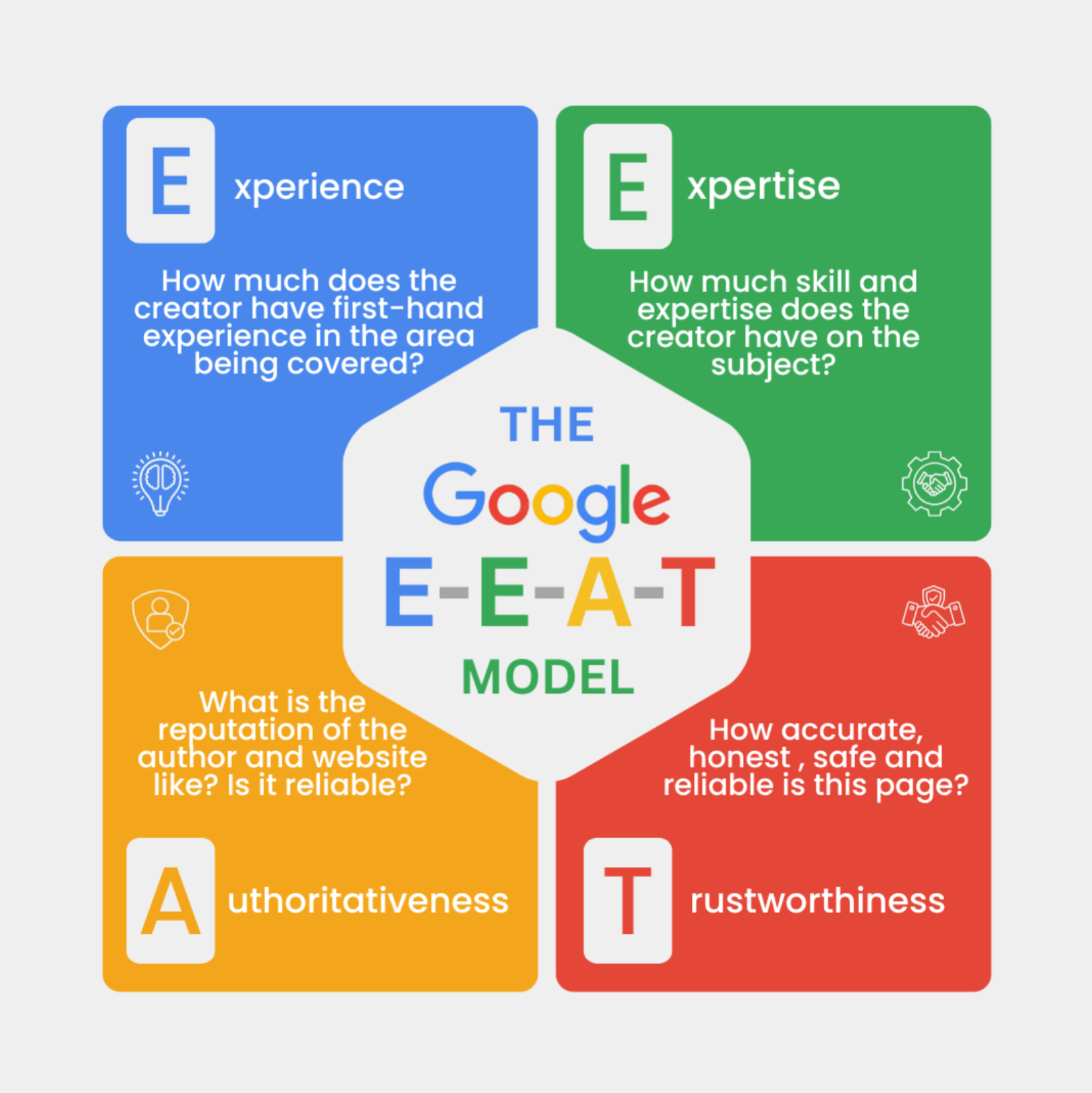
This is where Google’s EEAT signals come into play, standing for Experience, Expertise, Authoritativeness, and Trustworthiness. Think of these as Google’s quality benchmarks. They help the search engine determine which content is genuinely valuable, reliable, and worthy of surfacing in results.
Originally introduced as E-A-T, the framework was updated to add Experience, a subtle but powerful change. Google no longer just wants content that looks polished or “academic”, it wants to see evidence that the creator has been there, done that, and can speak from real-world knowledge.
At AdVisible, we don’t see EEAT as a tick-box SEO guideline. We treat it as a long-term strategy for building visibility, credibility, and lasting trust with both Google and real people.
According to Search Engine Journal, brands that consistently demonstrate real-world experience, backed expertise, recognised authority, and transparent practices are far more likely to win loyalty, repeat engagement, and sustainable growth.
In this article, we’ll unpack each of the four EEAT elements, explain why they matter, and show you how to apply them to your brand. If you’ve ever wondered how to not just rank, but to truly resonate with your audience, this is where you’ll find your blueprint.
Experience: Driving Engagement and Credibility
Experience is the “E” that sets EEAT apart from the earlier E-A-T model. Where expertise signals knowledge and skill, experience proves you’ve rolled up your sleeves and actually done the work.
In practice, Google is looking for content rooted in firsthand knowledge, not recycled or second-hand information. Its Search Central guidelines make this clear: sharing lived experiences make content more authentic and trustworthy, both for readers and search engines.
For sensitive topics known as “Your Money or Your Life” (YMYL) areas like finance, health, and law experience isn’t just nice to have. It’s critical. A generic blog on tax rules written by someone with no accounting background could mislead. But insights from a tax adviser who has walked clients through those rules carry both weight and reliability.
Why Experience Matters
- Authenticity builds engagement
People connect with what feels real. HubSpot found that 70% of consumers prefer to learn about brands through articles rather than ads. For instance, a blog written by someone who has actively worked in Melbourne’s property market will resonate more strongly than a generic “10 tips” piece written without local knowledge. - It differentiates your content
In a sea of similar blogs, content grounded in lived experience stands out. Two brands might cover the same SEO topic, but the one backed with campaign data, screenshots, or case studies is more likely to earn backlinks, shares, and higher rankings. - It signals credibility
Google’s Search Quality Rater Guidelines are explicit: real-world experience is a marker of high-quality content. Sharing tested strategies, trial-and-error learnings, or direct client outcomes shows that your insights aren’t theoretical, they’ve been applied.
How Brands Can Demonstrate Experience
- Bring in testimonials and case studies
Nothing says “we’ve done this” like hard results. Share how your product or service solved a problem. For example, a marketing agency might highlight how a campaign increased a client’s traffic by 45% in three months. - Use author narratives
Encourage contributors to weave in their stories. A wealth manager writing about retirement can boost trust by simply stating: “In my 15 years advising clients, one recurring challenge has been…” - Visualise your experience
Don’t just describe, show. Include photos, videos, or behind-the-scenes shots of your team in action. For a restaurant, that could mean a kitchen walk-through, for an agency it might be dashboards or client workshop snaps. - Highlight local or niche knowledge
Experience doesn’t have to be global to matter. Local expertise, such as understanding Sydney’s rental market or Melbourne’s café culture, demonstrates insight that generic content simply can’t replicate.
Common Pitfalls
- Claiming experience without proof. Audiences (and Google) want receipts.
- Overstating or exaggerating results — a quick way to erode trust.
- Relying solely on text. Visuals and data add weight and believability.
Measuring the Impact of Experience
You can measure whether your “experience-first” approach is working by tracking:
- User engagement metrics like time on page, scroll depth, and comments.
- Backlinks and shares, which often indicate others see your content as valuable.
- Customer reviews and testimonials, reflecting trust in your hands-on knowledge.
Ultimately, experience is the human touch in EEAT. It separates “just another article” from content that truly resonates.
Expertise: Showing Real-World Knowledge
If experience is about what you’ve done, expertise is about what you know. It represents verified knowledge, professional skills, and subject-matter competence. Together, experience and expertise create a compelling one-two punch: practical credibility plus intellectual authority.
In fields like healthcare, finance, or law, expertise isn’t optional. It’s non-negotiable. Mistakes in these spaces can have serious, real-world consequences. But even outside YMYL sectors, expertise signals reliability and positions your brand as a trusted advisor.
Why Expertise Matters
- It establishes credibility
People are far more likely to trust content when the author has demonstrable credentials. Google’s Quality Evaluator Guidelines instruct raters to consider whether a piece was written by someone qualified to speak on the subject. - It strengthens SEO performance
Google looks for signals of authority. Content written (or at least reviewed) by experts tends to attract more links, mentions, and citations, all factors that feed organic visibility. - It builds recognition
Expert-driven content is more likely to be referenced by journalists, bloggers, or industry peers. That snowball effect helps cement your authority.
How Brands Can Demonstrate Expertise
- Showcase author credentials
Include bios, qualifications, or links to professional profiles. Articles with clear authorship and credentials consistently outperform anonymous posts. - Leverage data and research
Support claims with statistics, studies, or reputable sources (e.g. ABS, Deloitte, McKinsey). This not only strengthens your argument but also shows your brand cares about accuracy. - Create comprehensive content
Expertise is demonstrated through depth. Instead of surface-level “tips”, create detailed guides, step-by-step walkthroughs, or deep dives into strategy. - Highlight affiliations and awards
Professional memberships, certifications, or industry awards all reinforce expertise.
Common Pitfalls
- Publishing without author details as it weakens both user and Google trust.
- Producing thin content that suggests you’ve only skimmed the surface.
- Relying on outdated sources, expertise is only credible if it reflects current best practice.
Measuring Expertise
- Quality backlinks from authoritative sites.
- User engagement — time on page, comments, shares.
- Conversion impact — expert-led content often inspires more trust-driven actions.
Expertise tells your audience, “You can rely on us, we know what we’re talking about.” Combined with experience, it’s a credibility powerhouse.
Authoritativeness: Becoming a Trusted Industry Voice
Once you’ve shown you’ve done the work (experience) and know your stuff (expertise), the next step is proving that others recognise it too. That’s where authoritativeness comes in.
Think of it this way: experience shows you’ve walked the path, expertise proves you understand it, and authority demonstrates that others trust you enough to recommend your guidance.
Why Authoritativeness Matters
- It signals trust to Google
Google evaluates external endorsements i.e. backlinks, citations, mentions to judge authority. These signals act like votes of confidence. - It boosts user confidence
People are more likely to trust brands recommended by respected industry voices. Authority rubs off. If credible outlets cite you, you inherit some of that trust. - It drives long-term brand recognition
Beyond rankings, authoritativeness positions your brand as a thought leader. Over time, this builds loyalty, repeat engagement, and higher conversions.
How Brands Can Build Authority
- Earn high-quality backlinks
One strong link from a trusted industry site outweighs dozens from low-quality sources. - Seek media coverage
Getting featured in news outlets, industry blogs, or podcasts boosts both reach and credibility. - Invest in thought leadership
Contribute guest articles, run webinars, or speak at events. Consistently sharing unique insights builds authority. - Leverage partnerships
Align with reputable organisations. For example, a digital agency recognised as a Google Partner signals credibility to clients and search engines alike.
Common Pitfalls
- Chasing quantity over quality in backlinks.
- Ignoring social proof like reviews or testimonials.
- Sending mixed signals with inconsistent messaging across channels.
Measuring Authoritativeness
- Monitor backlink profiles for quality, not just volume.
- Track media mentions and citations.
- Use domain authority or trust flow metrics to gauge progress.
- Analyse engagement trends and client testimonials to see how authority translates into perception.
Authoritativeness is about reputation. It’s others saying: “Yes, this brand knows what they’re talking about, and we’d trust them to guide us.”
Trustworthiness: Establishing Brand Reliability
The final and arguably most crucial pillar of EEAT is trustworthiness. You can have all the experience, expertise, and authority in the world, but if people don’t trust you, the rest doesn’t matter.
Trust is fragile. Once broken, it’s hard to rebuild. Which is why Google and more importantly, your audience place such weight on this factor.
Why Trustworthiness Matters
- It influences decisions
A trustworthy website makes users comfortable enough to take action, whether that’s subscribing, booking, or buying. - It reduces bounce rates
Content that feels reliable encourages people to stay longer, explore further, and come back. - It protects brand reputation
Transparency and honesty safeguard you from backlash and misinformation scandals.
How Brands Can Demonstrate Trustworthiness
- Publish accurate, up-to-date content
Regularly fact-check and update. Especially important if you’re sharing stats or compliance-related advice. - Secure your website
HTTPS, SSL certificates, and visible trust badges are now basic hygiene factors. - Use social proof
Show genuine testimonials, case studies, or verified reviews. - Communicate transparently
Make privacy, refund, and data policies easy to find and understand.
Common Pitfalls
- Leaving outdated or misleading info live.
- Hiding pricing or terms in fine print.
- Ignoring reviews or complaints instead of addressing them.
Measuring Trustworthiness
- Engagement metrics (bounce rate, repeat visits).
- Customer feedback and ratings.
- Security audits and regular updates to policies and content.
Trustworthiness is the glue holding the other EEAT pillars together. Without it, the rest collapses.
Implementing EEAT Across Your Brand
Understanding EEAT is only half the battle. The real value comes from weaving these principles into every corner of your digital presence, not just your blogs or service pages, but also your “About” section, case studies, social profiles, and even how you handle customer reviews.
Think of EEAT as the DNA of your online brand. It should be visible in everything you publish and reinforced at every touchpoint where a potential customer, partner, or Google itself interacts with you.
Here’s how to put it into practice in a way that actually moves the needle:
1. Audit Your Website and Content
Start by asking the tough questions:
- Do your pages clearly show author credentials? Or are they generic posts with no indication of who wrote them?
- Are your claims backed by credible sources, case studies, or real-world examples?
- Does your content demonstrate first-hand experience, or does it read like something anyone could have Googled?
Practical step: Create an “EEAT checklist” for your team. Before anything is published, run through its credentials, references, examples, and tone. This keeps quality consistent and ensures every piece of content strengthens your EEAT signals.
2. Update Your Profiles and Proof Points
EEAT doesn’t stop at your website. Every profile your brand owns is a potential credibility signal, from LinkedIn and industry directories to press mentions. Outdated bios or vague case studies can undermine trust just as much as poorly written content.
- Bios: Highlight both professional expertise and hands-on experience. Readers want to know there’s a real, capable human behind the words.
- Case studies: Go beyond the fluff. Include numbers, timeframes, and the challenges you overcame. That’s what convinces prospects you’ve done it before and can do it again.
- Testimonials: Keep them fresh. A testimonial from 2018 may still be valid, but it won’t carry the same weight as a recent one.
3. Double Down on Thought Leadership
Publishing content isn’t enough anymore. To cut through the noise, you need to show up consistently as a voice of authority in your space.
- Detailed content: Instead of short, surface-level blogs, invest in in-depth guides, whitepapers, or webinars that show your depth of knowledge.
- Unique perspectives: Share lessons from your own campaigns, client projects, or niche experiences. These can’t be copied easily and they set your brand apart.
- Visibility outside your site: Contribute guest posts, join podcasts, or present at industry events. These external validations feed directly into authoritativeness.
Remember: The more your brand is seen as teaching the industry rather than just participating in it, the stronger your EEAT signals become.
4. Prioritise Security and Transparency
This is the trustworthiness piece that too many businesses overlook. You can have the best content in the world, but if your site doesn’t feel safe, users won’t stick around and Google won’t recommend you.
- Technical security: HTTPS, SSL certificates, secure payment gateways are all now the bare minimum.
- Policies: Clear privacy, returns, and refund policies aren’t just legal necessities, they’re trust signals. People want to know what happens if things don’t go as planned.
- Transparency: Whether it’s pricing, data handling, or content disclaimers, clarity is always better than ambiguity. Hiding details only makes prospects suspicious.
5. Monitor, Measure, and Refine
EEAT isn’t a one-and-done project. It’s an ongoing process of testing, measuring, and adjusting.
- Engagement metrics: Are people staying on your pages longer and exploring more content? That’s a good sign your credibility is resonating.
- Backlinks and mentions: Track how often others cite or link to your content. External validation is a powerful indicator of authoritativeness.
- User sentiment: Read reviews, comments, and feedback closely. They’re not just customer opinions, they’re direct signals of how much trust your brand commands.
Practical step: Review these metrics quarterly. Identify what’s working (e.g., case studies driving backlinks, or transparent pricing improving conversions) and double down on those strategies.
Beyond SEO: EEAT as a Business Strategy
When implemented properly, EEAT stops being “just an SEO tactic” and evolves into a holistic business strategy.
- For marketing: It strengthens your content strategy and ensures everything you publish builds credibility.
- For sales: Testimonials, case studies, and trust signals shorten sales cycles and reduce objections.
- For branding: EEAT turns your business into a thought leader not just another competitor.
- For growth: Strong EEAT signals compound over time, attracting not just traffic but loyal customers.
Done right, EEAT doesn’t just help you rank better. It builds a brand people want to buy from, recommend, and return to, the ultimate trifecta of long-term growth.
Final Thoughts
This isn’t about ticking boxes for Google. It’s about building a brand that’s both discoverable and dependable.
Experience, expertise, authority, and trust work together to ensure your business isn’t just visible in search, but also respected and remembered by your audience.
At AdVisible, we see EEAT as a long-term investment in trust. Brands that consistently show real-world insight, verified knowledge, and transparency don’t just win rankings, they win loyalty, recognition, and sustainable growth.
In a competitive digital landscape, that’s the edge that truly matters.
Ready to strengthen your brand’s EEAT and boost your search visibility?
Let’s build content that not only ranks but also earns trust, authority, and long-term customer loyalty. Get in touch today, and we’ll create a tailored SEO and content strategy that puts EEAT principles at the heart of your digital presence. Get you free audit now!