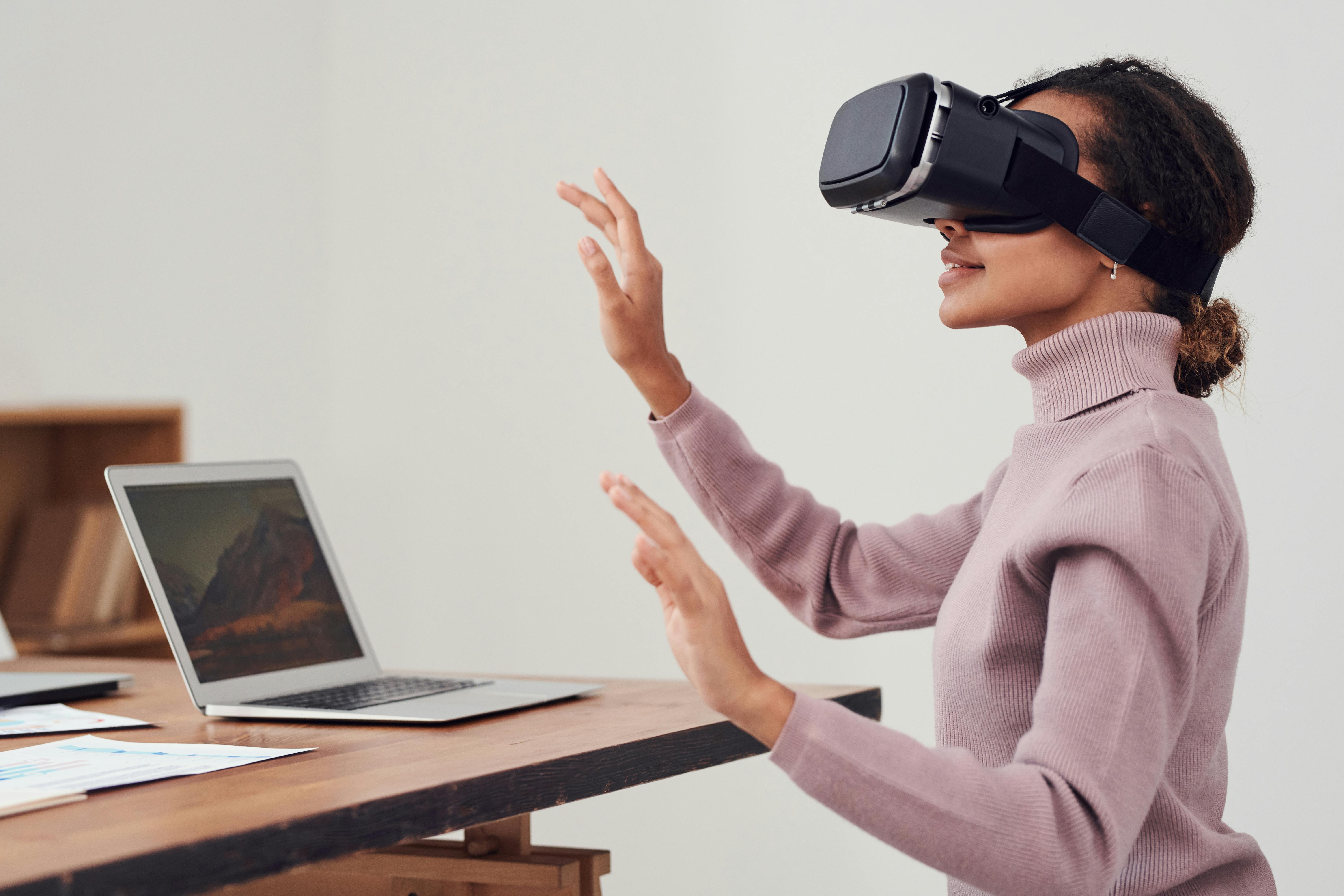
If you run an online store, you have probably felt the growing tension between customer expectations and the limits of traditional e-commerce. Shoppers want more confidence before they buy. They want to see products in their space, understand scale and texture, and know exactly what they are getting. They want the certainty of in-store shopping with the convenience of online browsing.
That is where Augmented Reality steps in. AR is not new, but in 2025 it has reached a turning point. It is now affordable, accessible, and powerful enough for everyday brands to use. And it is rewriting the rules for online shopping.
Today, customers want to try before they buy, even online. AR is making that possible, unlocking a new era of interactive, immersive e-commerce experiences.
In this blog, we will explore how AR is reshaping online shopping, what it means for brands, and how forward-thinking businesses can adopt it to drive higher conversions, fewer returns, and stronger customer trust.
Why AR Matters Now More Than Ever
E-commerce adoption skyrocketed over the past several years, but so did customer hesitation. As online competition grows, shoppers have become more cautious and more demanding.
Studies reveal that one of the biggest barriers to online purchases is uncertainty. Questions like
- Will it fit
- Will the colour match
- Is the material of good quality
- Will it look good in my home
- Will it suit me
AR tackles these fears head-on.
What AR solves in e-commerce
- Helps shoppers visualise products in real environments
- Offers confidence by letting users interact with products virtually
- Reduces uncertainty that leads to cart abandonment
- Provides richer information than static photos or videos
- Creates a more memorable brand experience
Customers no longer just view a product. They experience it.
And because AR increases certainty, retailers who adopt it are seeing measurable results. Higher engagement, higher conversion rates, and significantly fewer returns.
AR in Action: What It Looks Like for Online Shoppers
If you are new to AR, the simplest way to think of it is this. Instead of imagining a product, your customer gets to place it in their world, using their phone or desktop.
Here are the most common ways online brands use AR today.
1. Virtual try on for fashion and beauty
Shoppers can try on glasses, jewellery, hats, shoes, makeup, and more using their phone camera. The AI maps their face or body, allowing the customer to see themselves wearing the item instantly.
This is a game-changer for
- eyewear stores
- cosmetics brands
- jewellery retailers
- fashion boutiques
Instead of guessing if a shade suits them, customers know. They react instantly and emotionally, just like they would in a shop.
2. Place the product in your home
Furniture, decor, appliances, artwork, and large items can be viewed in real environments. Shoppers open AR mode, hold up their phone, and drop the product into their space. They can walk around it, see the scale, and rotate the item to examine details.
This instantly reduces return rates for size and colour issues. It also boosts buyer confidence because the customer sees exactly how the product fits in their lifestyle.
3. Interactive 3D product demos
AR lets customers manipulate products in 3D. They can zoom in, spin, tap, open drawers, test functions, and explore details they cannot see in standard photos.
This works incredibly well for
- electronics
- homeware
- premium accessories
- sports gear
It is like giving customers the ability to inspect a product in a store, but from anywhere.
4. AR guided shopping
Shoppers can point their phone at their room or their body, and the AR system offers personalised recommendations.
Examples
- A user scans their living room. AR suggests the right-sized sofa and matching decor.
- A customer scans their face. AR recommends makeup shades based on skin tone.
- A user scans their body. AR recommends clothing sizes for different brands.
This is not just useful. It feels personal, intuitive, and modern.
What AR Can Do for Your Business: The Real Benefits
Many business owners think AR is futuristic or expensive. In reality, it is becoming more accessible each year, and the advantages are becoming impossible to ignore.
Higher conversion rates
Customers buy faster when they feel confident. AR gives them the confidence they need by bringing products to life.
Retailers using AR commonly report
- Up to 40 percent increases in conversions
- More decisive buyers
- Shorter purchase cycles
The more immersive and informative your product experience, the easier the decision.
Reduced returns
Returns are one of the costliest problems in e-commerce. In categories like apparel and furniture, return rates can reach very high levels.
AR helps reduce returns by addressing the top reasons customers send products back
- Wrong size
- Wrong colour
- Looked different in person
When customers know exactly what to expect before they buy, there are fewer surprises and fewer refunds.
Increased customer engagement
AR makes your shopping experience more fun, more interactive, and more memorable. Users spend longer exploring products and interacting with your brand.
Longer engagement means
- More brand loyalty
- More repeat visits
- Better word of mouth
People share AR experiences organically because the novelty and practicality resonate.
Stronger brand differentiation
Most e-commerce stores look and feel the same. AR sets you apart immediately.
It signals to customers that your brand is innovative, customer-focused, and forward-thinking. That creates a competitive advantage in cluttered online markets.
Improved product understanding
Clearer expectations lead to more satisfied buyers. AR shows your product in its true form, not just in a perfectly lit photoshoot.
Customers
- touch
- rotate
- zoom
- explore
They fully understand the item before they buy it, which enhances overall satisfaction.
Categories Where AR Is Already Making an Impact
Some industries are adopting AR faster than others, but almost all product categories can benefit.
Furniture and homeware
This is one of the strongest AR categories. Customers can place sofas, lamps, desks, plants, rugs, and shelves in their room.
If you sell anything that depends on size and aesthetics, AR is a powerful tool.
Fashion and accessories
Virtual try on reduces the guesswork in fit and style. This is now expected from eyewear brands but is expanding into clothing and jewellery as well.
Beauty and skincare
Makeup brands have rapidly adopted AR to let users test lipstick, foundation, blush, and eyeshadow. This significantly improves confidence in shade selection.
Electronics
AR allows shoppers to examine the design of gadgets closely and see how they look on a desk, counter, or room.
Automotive
Car brands use AR to allow customers to configure models, preview colours, and inspect interiors. Even smaller dealerships can adopt simplified versions.
Home improvement
Customers can preview paint colours, tiles, flooring, and fixtures.
AR removes guesswork from choices that customers typically agonise over.
What Businesses Get Wrong About AR
AR is powerful, but only when implemented correctly. Many brands fall into common traps.
Mistake 1: Treating AR as a gimmick
AR is not a novelty. It must serve a real purpose, such as improving product visualisation or helping choose the right size.
Mistake 2: Using low-quality 3D models
Customers notice poor rendering. Investing in accurate textures and true scale matters.
Mistake 3: Making AR hard to access
If users must download an app, they leave. AR should work directly from the product page.
Mistake 4: Not integrating AR into the buying journey
AR is most effective when clearly visible on your product pages with simple calls to action like ‘Try it in your room’ or ‘View in AR’.
Mistake 5: Not tracking AR analytics
AR interactions provide powerful insight
- which items customers try
- how long they use AR
- what features they explore
These metrics help you optimise your product pages and inventory decisions.
How to Introduce AR Into Your Online Store
If you are considering adding AR to your e-commerce experience, here is how to approach it strategically.
Step 1: Identify products where AR will make the biggest impact
Typically, these are high consideration or high return items.
Examples
- furniture
- clothing
- decor
- electronics
- beauty products
Start with a few products before expanding across your catalogue.
Step 2: Choose the right AR technology
There are three main pathways
- AR through your website
- AR through your mobile web
- AR through your app
Most brands start with mobile web because it is accessible and friction-free.
Step 3: Build high-quality 3D assets
This includes
- accurate dimensions
- real textures
- proper lighting
- smooth interactions
Your AR assets should represent the product exactly as it exists.
Step 4: Integrate AR directly into product pages
Visibility is essential. Add a clear button such as ‘View in your space’ or ‘Try on virtually’.
Step 5: Promote AR as part of your unique customer experience
Include messaging like
- See it in your room before you buy.
- Make try before you buy part of your brand value proposition.
Step 6: Track performance and refine
Monitor
- conversion lifts
- engagement rates
- return rate reductions
- user session lengths
Use this data to optimise.
What the Future of AR in E Commerce Looks Like
AR is evolving fast, and the next few years will push it even further.
Hyper-Realistic models
AR visuals will soon become indistinguishable from real photos, making digital shopping feel like a mirror of physical retail.
AI-Powered personalisation
AI will automatically recommend items based on room scans, body scans, and usage patterns.
AR in social commerce
AR shopping will move deeper into platforms like Instagram, TikTok, and Pinterest. Shoppers will try products directly from a creator’s video or story.
AR for customer service
Support teams will show customers how to assemble or troubleshoot products using AR overlays.
Full AR shopping journeys
Imagine browsing a virtual store through your phone. You walk down aisles, view shelves, and pick up items. That is where the industry is headed.
AR will not just enhance e-commerce. It will redefine it.
Final Thoughts
AR is becoming one of the most important tools in modern e-commerce. It bridges the gap between online and in-store shopping by giving customers confidence, clarity, and immersion. It helps them understand your products, trust your brand, and make decisions with certainty.
For businesses, AR means
- higher conversions
- fewer returns
- more loyal customers
- stronger brand differentiation
- richer engagement
Adopting AR is no longer about being futuristic. It is about creating a better experience today.
At AdVisible, we help businesses embrace new technologies in smart, practical, and scalable ways. Whether you want to explore AR for your store, build 3D assets, or integrate AR into your product pages, our team can guide you every step of the way.If you want to future-proof your e-commerce experience, increase conversions, and deliver a truly interactive shopping journey, get in touch with AdVisible. Let us help you bring your products to life.